Essential Steps for Choosing a Reliable Garage Door Repair Company
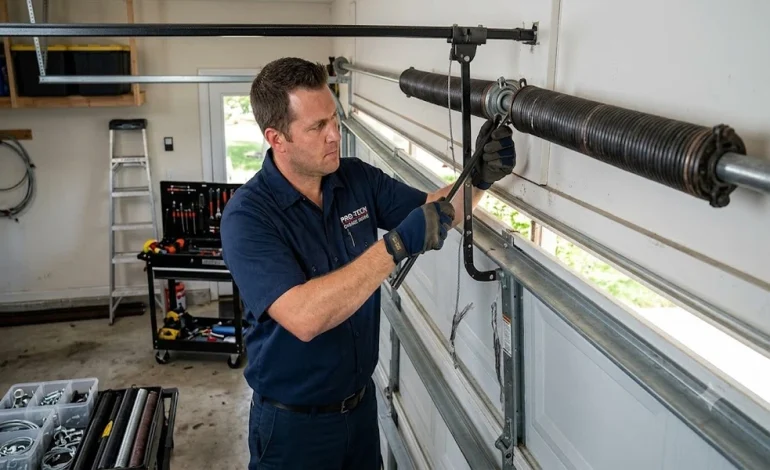

A garage door that won’t budge throws your whole morning off. Worse, it’s a security gap and a safety hazard sitting right there in plain sight. These systems run on serious tension – springs wound tight enough to lift a few hundred pounds of steel and wood. Try fixing one yourself without knowing what you’re doing, and you’re looking at a trip to the ER, not a DIY win. Call someone who actually knows the trade, and fast. But how do you tell the pros from the guy with a van and a business card he printed at home?
What Actual Professionals Handle
An overhead door isn’t one part – it’s a whole system, dozens of pieces working together. Sun, rain, daily use, all of it wears things down. A good garage door repair company technician doesn’t slap a fix on the symptom. They find what’s actually broken
Source : Gemini
Spring replacement is probably the big one. Torsion springs, extension springs – whatever your setup uses – they’re doing the heavy lifting, literally counterbalancing a door that can weigh 300 pounds or more. Snap one, and suddenly you can’t lift the door by hand even if you wanted to. Replacing them right means calibrating tension so the door doesn’t slam or drift. Get this wrong and you’ll know within a week.
Cables and pulleys work in tandem with the springs. I’ve seen frayed cables cause a door to hang crooked in the track, grinding and jamming on one side. Not pretty, and it only gets worse.
Then there’s the tracks themselves, plus the safety sensors near the floor – the little eyes that stop the door from closing on your kid’s bike or your foot. Knock one out of alignment and the door either won’t close at all or, worse, doesn’t reverse when it should. That’s not a minor annoyance. That’s a liability.
And motors. Circuit boards, limit switches, drive gears – when a door freezes halfway through its cycle, something electrical is usually the culprit, and it takes real troubleshooting to find it.
Credentials That Actually Matter
Don’t wait for a 6am garage door emergency to start vetting companies. Do it now, while you’ve got time to think straight.
Licensing and insurance, first. A legit outfit carries general liability and workers’ comp. Liability covers your driveway concrete if something goes sideways during the job. Workers’ comp means you’re not on the hook if a technician gets hurt on your property. Ask for proof before anyone touches your door – not after.
Pricing should be written, and it should follow an actual inspection. If someone quotes you a price over the phone without ever looking at your springs, your tracks, your opener – walk away. I’ve watched homeowners get quoted $150 on the phone and handed a $400 bill once the “hidden issues” magically appeared mid-repair. A real quote breaks down labor, parts, and the service call fee separately, so nothing sneaks up on you later.
Parts matter more than people think. High-cycle steel springs and commercial-grade rollers cost more up front. They also last years longer than the bargain-bin stuff. Ask what they’re installing. And get the warranty in writing – labor and parts both.
Mistakes That Cost You Later
Small noises mean something. A squeak, a jerky start, a half-second delay before the opener kicks in – these aren’t quirks, they’re warnings. Ignore them and you’ll be calling for an emergency repair on a Sunday when the whole thing gives out, probably with your car trapped inside.
Here’s one that trips people up constantly: only replacing the one spring that broke. If a torsion spring snaps, its partner has logged the exact same number of open-close cycles under the exact same stress. It’s going to fail too – usually within weeks or months. Replace both, every time. Any technician who doesn’t bring this up on their own is cutting corners.
And be skeptical of the lowest bid. Not always – sometimes cheap is just cheap. But more often than not, a rock-bottom quote means low-grade hardware, an uncertified installer, or fees that appear later. Quality hardware built for thousands of cycles isn’t cheap to manufacture, and companies pricing it like a fast-food combo meal are cutting something somewhere.
Keeping It Running
A little upkeep goes a long way. Clear debris and grease buildup out of the tracks – leaves and grit love to collect there and cause binding. Lubricate hinges, rollers, and springs every few months with a silicone-based spray. Skip the heavy grease; it just traps dust and grinds things down faster.
Test the auto-reverse function occasionally. Set something solid on the ground under the door’s path and run it down. If it touches the object and keeps going instead of reversing immediately, stop. Unplug the opener and call a certified tech before you use it again.
Choosing well here isn’t complicated, but it does take a little diligence. Check the credentials. Demand a written estimate from a garage door repair company after an actual inspection. Push back on cheap hardware. Do that, and your garage door will outlast most of the other stuff in your house