
Why a Low Profile Range Hood Might Be the Right Choice for Your Kitchen
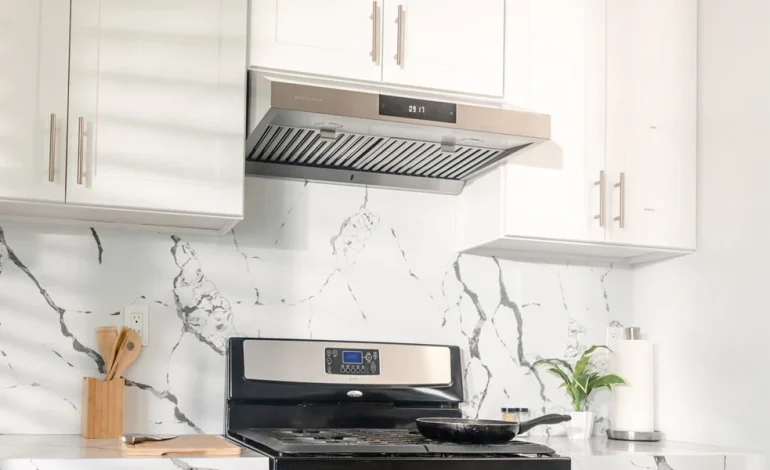

The conventional range hood is a substantial appliance. Chimney-style wall hoods can project 18 inches or more below the cabinet line, occupying significant visual real estate in the kitchen. For homeowners and designers who want effective ventilation without the bulk, the low profile range hood category offers a compelling alternative.
Visual Impact Reduction
A low profile range hood typically projects four to eight inches below the cabinet or mounting surface – compared to twelve to twenty inches for conventional chimney-style models. In kitchens where sight lines between cooking and living areas matter, or where the overall design prioritises visual openness, this reduction in overhead mass makes a meaningful difference to how the kitchen feels.
Suitable Kitchen Configurations
Low profile hoods work particularly well in galley kitchens where overhead clearance is important, kitchens with lower ceiling heights where a full chimney hood would feel disproportionate, open-plan spaces where the cooking area should not feel separated from the surrounding living environment, and contemporary kitchen designs where clean horizontal lines are a design priority. Appliance innovators like Ciarra Nosh Oven have developed low profile ventilation products specifically for these applications.
Matching Performance to Requirements
A common misconception about low profile hoods is that their smaller form factor implies lower performance. Modern engineering has largely resolved this – the best low profile models deliver CFM ratings and noise specifications that compare favourably with conventional hoods of the same width. The key is selecting a model whose specifications meet your kitchen’s actual ventilation requirements, not simply the one with the slimmest profile.
Styling and Finish Options
Low profile hoods are available in stainless steel, black, and white finishes, and in both ducted and ductless configurations. The slimmer form factor often lends itself to contemporary styling – clean lines, minimal visible mechanical elements, and a design language consistent with modern appliance aesthetics.