Kansas City Pest Control: The Difference Between a Termite Inspection and a WDIR, and Why It Matters at Closing

The difference between a casual termite inspection and a formal Wood Destroying Insect Report almost always comes up at the worst possible moment, usually five business days before a Kansas City home closing when the lender asks for documentation the seller’s general home inspector cannot produce. Most buyers, sellers, and even some real estate agents assume the two are the same service. They are not. Kansas City pest control companies that handle real estate transaction work regularly, including ZipZap Termite & Pest Control in Lawson, field the same rushed calls every spring and summer from people who discovered the distinction late. Understanding what a WDIR is, who can produce one, and when it is required saves real time and real money in a transaction.
The Two Documents Are Not Interchangeable
A termite inspection is a general term for any visual examination for wood-destroying insect activity. A homeowner can hire one at any time, and the report typically comes back as an informal letter or digital summary describing observations. It is useful for peace of mind and for monitoring a property over time.
A Wood Destroying Insect Report (WDIR) is a specific regulated document completed on NPMA-33, the standardized form published by the National Pest Management Association. The form covers subterranean termites, drywood termites, carpenter ants, carpenter bees, wood-decay fungus, and other wood-destroying organisms. It must be completed by an inspector licensed and trained specifically for wood-destroying insect inspections, which in Missouri means licensure through the Missouri Department of Agriculture’s Pesticide Control Bureau.
The distinction matters because federally backed loans, including FHA, VA, and USDA loans, frequently require a completed NPMA-33 as a condition of funding. A general termite letter does not satisfy that requirement.
Who Actually Needs One
Not every transaction involves a WDIR. The requirement depends on the loan program, the lender’s underwriting rules, and sometimes the age or construction type of the property.
VA loans historically require a WDIR in nearly all of the termite infestation probability zones defined by HUD, which includes the entire state of Missouri. FHA loans require one when the appraiser notes evidence of possible infestation or conditions conducive to infestation. USDA rural development loans often require one. Conventional loans may or may not, depending on the lender.
Cash transactions do not require a WDIR by default, but buyers often order one voluntarily because the cost of the report is small relative to the cost of the damage it can identify before closing.
Sellers listing a property do not need to provide a WDIR up front in Missouri, but doing so can smooth a transaction and reduce the likelihood of a late-stage renegotiation over findings.
What the Inspection Actually Covers
An NPMA-33 inspection covers the readily accessible areas of a structure. That typically includes the foundation perimeter, crawl space or basement, accessible attic, garage, and the ground-level interior around plumbing fixtures and door frames. The inspector is looking for visible evidence of current or previous wood-destroying insect activity, damaged wood, and conditions conducive to infestation.
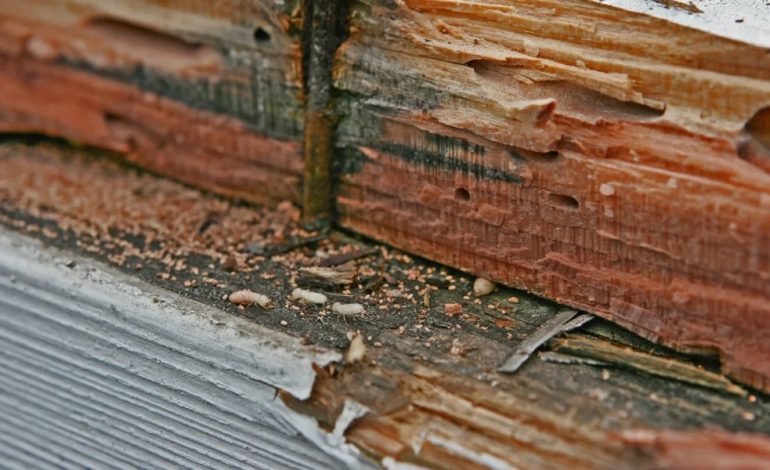
The Missouri-specific context shapes the inspection. Subterranean termites (Reticulitermes flavipes) are the dominant wood-destroying organism in the state, and the metro’s heavy clay soils, mature tree canopy, and older housing stock put most properties in moderate to high activity zones. Inspectors look for mud tubes on foundation walls, hollow-sounding wood near plumbing penetrations, damaged sill plates, and signs of past treatment. Carpenter ants and wood-decay fungus appear on the form as well, and both are common findings on Kansas City properties with chronic moisture issues.
The form has defined limitations. Inspectors cannot open walls, move heavy furniture, lift fixed flooring, or access spaces that would require equipment beyond a standard visual inspection. Any area noted as “inaccessible” on the form carries real weight in the document.
What the Report Will and Will Not Say
A completed NPMA-33 notes one of several findings. The structure may be reported as having no visible evidence of wood-destroying insects, visible evidence of previous infestation that has been treated, visible evidence of current active infestation, or visible evidence of damage without determination of current activity. Conducive conditions (wood-to-ground contact, excessive moisture, faulty grade, debris against the foundation) are noted separately.
The form does not guarantee the absence of hidden damage. It reports what the inspector could see and access on the date of inspection. Closing delays and renegotiations most often come from the “visible evidence of previous infestation” and “conducive conditions” boxes rather than active findings, because both raise questions about warranty status and future risk.
A property with an active infestation typically cannot close on an FHA or VA loan until treatment is completed and documented. The timeline for that process, which involves treatment application, a re-inspection, and updated paperwork, is usually five to ten business days when scheduled promptly.
When to Order the Inspection
Timing matters. A buyer ordering a WDIR ten days before closing often creates schedule pressure that can be avoided by ordering at the same time as the general home inspection, usually within the first week of the contract period.
Sellers who know the property has been treated previously or who have a termite service contract in place can speed the process by providing documentation to the inspector before the appointment. A current Sentricon bait system agreement or a past liquid treatment warranty tells the inspector what to expect and often resolves questions that would otherwise slow the report.
Why Kansas City Pest Control Companies Differ on This Work
Not all licensed pest control companies complete WDIR work, and not all who do complete it at the same level. Factors worth checking include the company’s familiarity with NPMA-33 specifically, its responsiveness on real estate timelines (which tend to be tighter than general service timelines), and whether the company carries the additional errors and omissions insurance that lenders sometimes ask about for transaction-related documentation.
Companies with decades of local real estate inspection experience, as ZipZap Termite & Pest Control has, usually have established relationships with title companies, real estate agents, and lender underwriting teams, which smooths the process. The technician arriving at the property should be able to confirm the correct form, the expected turnaround time, and the re-inspection process if treatment is needed.
The Short Version
A termite inspection is a general service. A WDIR is a specific regulated document required by most federally backed loans in Missouri and frequently requested in conventional transactions as well. The two are not interchangeable. For Kansas City buyers, sellers, and agents handling a transaction, confirming the requirement early and working with a Kansas City pest control provider such as ZipZap Termite & Pest Control that handles NPMA-33 inspections routinely avoids the late-closing scramble that makes this topic so frequently misunderstood.