Is Your Lyons House Still Running on Original Pipes?

Lyons was incorporated in 1888, built up around a brewery, a river and a railroad, and it grew into the kind of working village where houses get handed down rather than torn down. That is good for the streets and more complicated for what runs inside the walls, because a sturdy brick bungalow can look exactly as solid as the day it was finished while the pipes behind the plaster are steadily closing in on the end of their working life.
Most homeowners never see their plumbing until something goes wrong with it. The supply lines hide in joists, the drains disappear into concrete, and the line connecting the house to the street is buried several feet under the front lawn. So the question of what those pipes are made of, and how old they really are, tends to stay unanswered for years.
It is a question that comes up constantly for any Lyons plumber, and the shop on 44th Street has been fielding versions of it from neighbors in Lyons, Brookfield, Riverside and Countryside for a long time. The good news is that a homeowner can answer a surprising amount of it alone, with a flashlight, a magnet and a coin.
A Village Older Than Its Plumbing Codes
Houses here span more than a century, and each building era left its own fingerprint on the plumbing. A prewar bungalow may still have its original lead water service, galvanized steel supply lines and a cast iron drain stack feeding a clay tile sewer. A postwar ranch usually swapped galvanized for copper indoors but may have kept older materials underground. Homes built or gutted in the last few decades tend to be the most modern, though even they can hide an old service line that nobody dug up during the remodel.
Renovation history matters as much as the build date. A kitchen redone in 2005 might have new copper under the sink that connects to a seventy year old galvanized branch two feet away inside the wall. That mix is normal here, and it is why judging a house by its finishes can mislead you.
Telling the Old Pipes Apart
The gray line by the water meter
The pipe that comes through your basement wall and into the meter is the water service. If it is dull gray, soft enough to dent, and shows a shiny silver patch when you gently scratch it with a coin, it is very likely lead. A magnet will not stick to it. Lead services were standard in much of the Chicago region well into the 1980s, so this is the first pipe worth checking in any older Lyons home. The EPA’s Protect Your Tap guide walks through this exact scratch and magnet check with photos.
Threaded steel overhead
Galvanized steel looks similar to lead at a glance, but a magnet grabs it firmly and its joints are threaded rather than smoothly bulged. It rusts from the inside out, which narrows the opening over the decades. The usual symptoms are weak pressure at upstairs fixtures, brownish water after the taps sit unused, and leaks that start right at the threads.
The heavy black stack
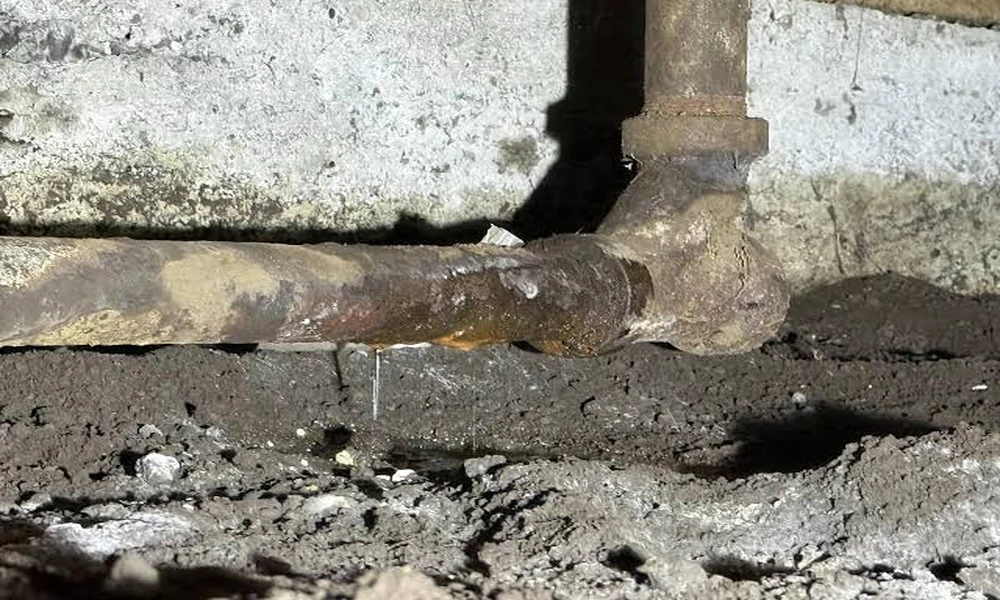
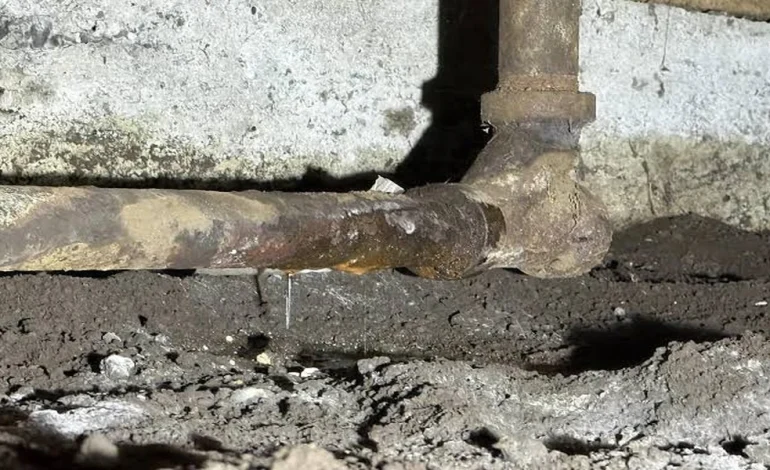
Cast iron carries waste down to the floor and out of the house. It is durable, and plenty of it is still working after eighty years. When it fails, though, it usually cracks along the bottom where water has run for decades or rusts through along a seam, and you may see orange streaks, flaking scale or a damp line on the pipe that never seems to dry.
Copper and its green warning
Copper was the upgrade of choice for generations, and it holds up well. Its weak points are pinhole leaks in aging lines and blue-green crust forming at fittings, both of which suggest the metal is wearing thin from the inside.
The pipe under the lawn
The sewer lateral running out to the street is often clay tile in older homes, laid in short sections that roots love to invade at the joints. You will never see it without a camera, which is why recurring slow drains in the basement are often the only clue it exists at all.
A Ten Minute Walk Through Your Basement
You can learn a lot before calling anyone. Pick a dry afternoon and work through these in order.
- Find the water meter and look at the pipe on the street side of it. Try the magnet, then the coin scratch, and note what you see.
- Follow the main supply line overhead and look at the first few joints. Threaded fittings with rust or white crust tell you galvanized is still in play.
- Turn on the highest tub or shower in the house, then open the kitchen tap. A big pressure drop upstairs points to narrowed supply lines.
- Run your hand along the bottom of the main drain stack where it meets the floor, feeling for roughness, dampness or bulging scale.
- Check under every sink for green crust, water stains on the cabinet floor or valves that won’t turn.
Write it all down, take photos and keep them with your house papers. That record becomes very useful the moment you need a quote.
Patch, Replace a Section or Start Over
Not every old pipe needs to come out tomorrow. A single leaking copper fitting is a repair. A galvanized branch to one bathroom can be replaced on its own when that bathroom gets remodeled. Cast iron with surface rust but no cracks can often keep working for years with periodic checks.
The calculation changes when problems start appearing in several places at once. Multiple threaded joints weeping, pressure that keeps sliding, or repeated root clogs in the lateral all suggest the whole system is aging together, and paying for piecemeal repairs every few months often costs more over time than a planned replacement. A camera inspection of the drain and lateral, combined with a look at the supply side, usually makes the right call obvious.
Deciding What to Fix First
When an older house needs more than one thing, the order matters. A lead water service generally sits at the top of the list because it touches every glass of water the household drinks, and the village water department is the place to ask about any local replacement assistance before work begins. Galvanized supply lines usually come next, since their decline is steady and the pressure problems only get worse. Drain and sewer work can often be scheduled around how the cast iron and the lateral actually look on camera.
Timing the bigger jobs with other projects saves real money. Opening a wall once for a bathroom remodel and new supply lines together is far cheaper than opening it twice. Permits are typically required for service line and repiping work, and an inspection at the end protects you when the house eventually changes hands. However long your home has stood, knowing what is inside its walls turns plumbing from a series of surprises into a plan you control.